The science of slow burn: why anticipation beats novelty
Why the partner you've had for ten years can still light you up more than a stranger, and the research that explains it.
Pop culture tells you that long-term relationships kill desire. After enough years, your partner becomes "comfortable" and the spark dies, and the only way back to real attraction is some kind of disruption. A new person. A near-miss. A drama.
This story is so widespread that most couples accept it without examining it. They assume their long-term partner can't light them up the way someone new could, because they've been told this is just how brains work.
Brains do not work that way. They work pretty close to the opposite of that. The research on long-term sexual attraction is one of the more counter-intuitive things in modern psychology, and worth understanding because it changes what you might bother trying.
What novelty actually is, biochemically
Novelty triggers dopamine. Dopamine produces a feeling that gets confused with attraction. New people produce more of it than familiar people, in the short term, because the unknown is the thing dopamine evolved to make you pay attention to.
Here's the trick: dopamine is not actually a feeling of pleasure. It's a feeling of anticipation. It's the system that makes you want a thing. It does not make you enjoy the thing. The enjoyment system is a different set of chemicals (opioids and oxytocin) that fire when the wanted thing is acquired.
New people give you a lot of dopamine and relatively little of the other stuff. The wanting is dialed way up. The actual experience of being with them is good, but not necessarily better than being with a long-term partner. People mistake the loudness of the wanting for the depth of the having.
Long-term partners give you the inverse. The wanting is quieter (less unknown, less dopamine), but the having is deeper. Oxytocin, the bonding chemical, increases with familiarity. Sex with someone you've been with for a decade releases more of it than sex with a stranger. The experience itself is, on average, more rewarding.
Most people don't know this and assume the louder wanting (novelty) means the better experience. It doesn't.
Why long-term partners can feel boring
The reason long-term sex can feel flat isn't biological inevitability. It's that you've stopped doing the thing that produces dopamine even with familiar partners. Which is anticipation.
New relationships have anticipation built in. You don't know what their body looks like yet. You don't know how they kiss. You don't know what they'd do if you did this. That uncertainty is the engine. Your brain runs forward, predicting, imagining, wanting to find out.
Long-term relationships, by default, have the opposite of anticipation. You know the routine. You know what's about to happen. The forward-running engine has nothing to chase, because the destination is fully visible from where you stand. So it idles. So the dopamine drops. So the sex feels flat, even though the partner you're with would actually deliver a deeper experience if you could just get back into wanting them.
The good news about this
Anticipation can be manufactured between familiar people. It is genuinely easier than novelty, because all you have to do is reintroduce uncertainty about a small specific thing.
A text in the middle of the day that says something specific and suggestive about tonight. Now there's anticipation about tonight. Tonight is no longer a default known thing. It's something you're being asked to imagine.
A kiss that goes on much longer than the routine kiss. Now there's uncertainty about what comes next. Your partner doesn't know if you're going to keep going or pull away. The dopamine engine wakes up.
A specific thing your partner is going to do to you in the next hour, that they've told you about and you're now waiting for. The hour you wait is the slow burn. Your brain is firing the entire time.
None of these is a new toy or a hotel room or a new partner. They're just micro-interventions that put back the uncertainty long-term familiarity took away. And once you start doing this regularly, the cumulative dopamine is honestly comparable to the early days of the relationship, because the source of dopamine was never the person being new. It was the anticipation being alive.
Why slow burn is the better word
"Spark" is the wrong metaphor. A spark is fast and bright and gone. That's new-relationship chemistry. It's exciting for a few months and then it's done.
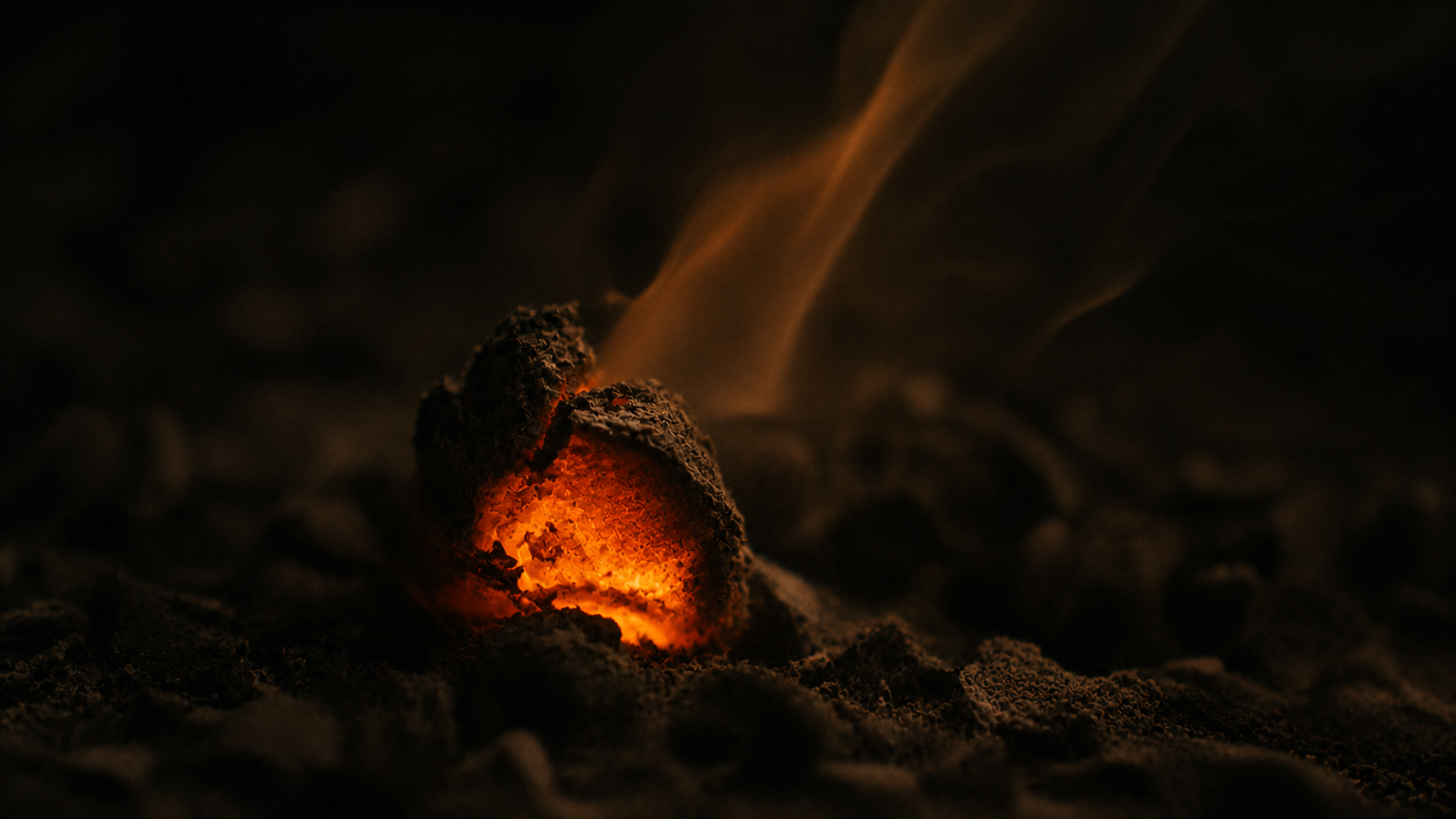
Slow burn is the longer thing. It's the sustained low heat that doesn't put itself out. It takes longer to ignite each time, but once it's going it lasts longer. And it works between people who already know each other deeply, where a spark would feel like a discount.
Couples who understand this stop chasing the spark. They stop comparing their current sex life to the early-days fireworks. They start tending the slow burn instead. The slow burn is harder to ignite and a thousand times more durable. It's also the thing the relationship is actually capable of producing, which the spark isn't anymore.
Three small interventions
If you want to actually try this:
One. Tell your partner something specific they're going to do to you tonight. Tell them in the morning. Let the whole day be anticipation. The "told in the morning" part is the part that does the work.
Two. Initiate something but stop halfway. Walk away with no further explanation. Resume it hours later. The interruption forces both of you to wait, which is the only thing dopamine wants.
Three. Ask your partner what's something they've been thinking about that they haven't asked for. Don't act on the answer immediately. Let it hang. Bring it up two days later as if you've been thinking about it (because you have).
Each of these intervenes on the variable that actually changes everything (anticipation) without requiring anything new. The partner you have, the body they have, the bed you share. All the inputs are the same. The slow burn just needs you to put space between wanting and getting, which is what your brain has been quietly missing.
The fire is still there. It just needs you to stop closing the door on it so fast.
Try the game we built
Rekindle is a couples game with consent and comfort gating built in. The first two levels are free, no signup.
Play now